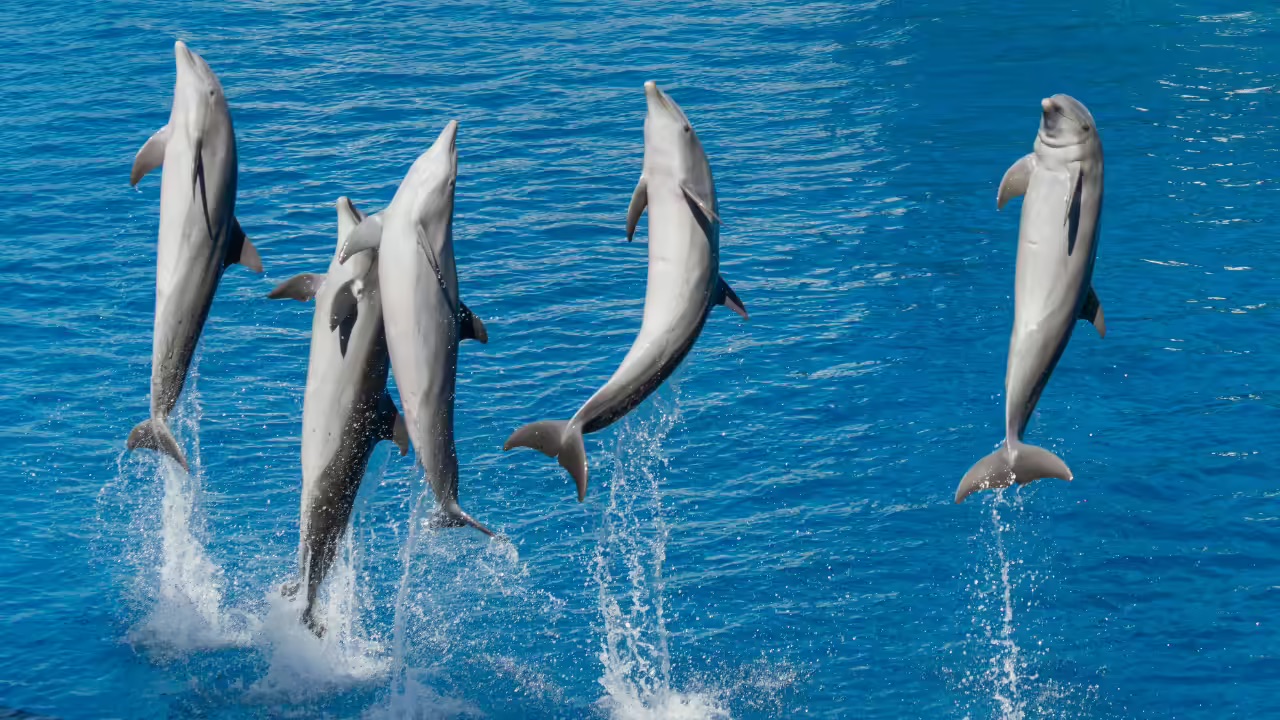
The first months of 2026 have been a time of serious trials and important discoveries for marine mammals. The DELPHIN HUB editorial team has gathered key events from around the globe: the mysterious deaths of dolphins in Florida, the ecological crisis on the Black Sea, groundbreaking intelligence research, and hopeful rescue initiatives
The first half of March and the beginning of 2026 have seen a series of events that underscore the fragility of marine ecosystems and their inextricable link to human activity. From the coast of Florida to the Black Sea, scientists and the public are raising the alarm, while new scientific data reveals the astonishing secrets of dolphin social life.
TRAGEDIES AND THREATS: WHAT'S HAPPENING TO THE OCEAN?
The most alarming situation is unfolding in the southeastern United States. The state of Florida is facing a spike in dolphin mortality. Since the beginning of the year, 41 deaths have been recorded in the Panhandle region, with 21 of those stranding in just the first two weeks of March. Local residents are finding dead animals right on the shores near their homes. Specialists from the Florida Fish and Wildlife Conservation Commission (FWC) and the local Marine Institute are conducting necropsies and taking samples to determine the cause. Theories range from a Red Tide algae bloom to an unknown pathogen, but official test results have not yet been released.
An equally dramatic situation is unfolding in the Russian Black Sea region. The beaches of Anapa are facing a problem with the disposal of dead animal carcasses. Activists are raising the alarm: after storms, the coastline turns into a "warehouse" of biological waste, including the bodies of dolphins, which remain decomposing on the sand for weeks due to bureaucratic confusion and the lack of services responsible for cleanup.
Completing this grim picture, a severely injured Red Book-listed Azov dolphin was discovered in the Krasnodar region. The animal, found in a lagoon at Bolshoy Utrish, had lost an eye and suffered from an extensive necrotic wound. Despite attempts by specialists from the Dolphin Rescue Center to get permission to help, the dolphin swam out to sea, and its fate remains unknown.
These events confirm a long-held scientific thesis: dolphins are indicators of ocean health. Their illnesses and deaths are a red flag, signaling distress in the entire marine environment caused by pollution, noise, and the accumulation of toxins.
SCIENTIFIC BREAKTHROUGHS: DOLPHINS AS A MIRROR OF EVOLUTION
Amidst the environmental alarms, science continues to surprise with discoveries that change our understanding of cetaceans. A study published in the prestigious journal Nature Ecology & Evolution has confirmed the "social brain" hypothesis for dolphins and whales. Scientists have found that the evolution of their brains followed the same path as that of primates: the size of the neocortex increased as social bonds became more complex.
It turns out that cetaceans with the largest brains possess astonishing cognitive abilities:
Researchers note that in terms of social organization, dolphins are almost on par with humans. The only thing preventing them from building a civilization is the lack of limbs suitable for manipulating objects. This discovery makes protecting their natural habitat even more critical: by destroying ecosystems, we are eradicating unique, highly developed societies.
Large-scale research is also ongoing in Russia. At the Shirshov Institute of Oceanology of the Russian Academy of Sciences, scientists are summarizing and continuing to analyze data from a long-term project on Black Sea dolphins, supported by an oil company. This research helps understand how the population is changing under anthropogenic pressure.
HOPE AND INITIATIVES: STEPS FORWARD
Despite the gloomy news, there are positive developments. A unique project is preparing to open in Europe. Off the coast of Italy, the continent's first protected marine sanctuary for dolphins "retiring" from aquariums is being established. Spanning over 7 square kilometers, the area will be separated from the open sea by nets and equipped with a 24/7 monitoring system.
Here, dolphins born in captivity and unable to survive in the wild will undergo a gradual adaptation program: they will be taught to hunt and navigate before being released. If successful, this project could become a model for the whole of Europe, where currently about 60 dolphins are held in captivity.
The educational front is also advancing. More and more online platforms and non-profit organizations, such as the Morris Animal Foundation, are offering programs to help people understand dolphin physiology and the threats they face. Supporting such research allows scientists to develop non-invasive methods for monitoring the health of wild populations and find ways to reduce the negative human impact.
CONCLUSIONS
The first 2.5 months of 2026 paint a dual picture. On one hand, we are witnessing the tragic consequences of our actions: mysterious deaths, ecological crises, and an inability to promptly protect injured animals. On the other hand, science is opening our eyes to the complex and socially advanced beings we are losing, and new, humane projects offer hope for correcting past mistakes.
DELPHIN HUB will continue to monitor these developments. We must listen to what dolphins are "telling" us about the state of the ocean and act before it's too late.
TRAGEDIES AND THREATS: WHAT'S HAPPENING TO THE OCEAN?
The most alarming situation is unfolding in the southeastern United States. The state of Florida is facing a spike in dolphin mortality. Since the beginning of the year, 41 deaths have been recorded in the Panhandle region, with 21 of those stranding in just the first two weeks of March. Local residents are finding dead animals right on the shores near their homes. Specialists from the Florida Fish and Wildlife Conservation Commission (FWC) and the local Marine Institute are conducting necropsies and taking samples to determine the cause. Theories range from a Red Tide algae bloom to an unknown pathogen, but official test results have not yet been released.
An equally dramatic situation is unfolding in the Russian Black Sea region. The beaches of Anapa are facing a problem with the disposal of dead animal carcasses. Activists are raising the alarm: after storms, the coastline turns into a "warehouse" of biological waste, including the bodies of dolphins, which remain decomposing on the sand for weeks due to bureaucratic confusion and the lack of services responsible for cleanup.
Completing this grim picture, a severely injured Red Book-listed Azov dolphin was discovered in the Krasnodar region. The animal, found in a lagoon at Bolshoy Utrish, had lost an eye and suffered from an extensive necrotic wound. Despite attempts by specialists from the Dolphin Rescue Center to get permission to help, the dolphin swam out to sea, and its fate remains unknown.
These events confirm a long-held scientific thesis: dolphins are indicators of ocean health. Their illnesses and deaths are a red flag, signaling distress in the entire marine environment caused by pollution, noise, and the accumulation of toxins.
SCIENTIFIC BREAKTHROUGHS: DOLPHINS AS A MIRROR OF EVOLUTION
Amidst the environmental alarms, science continues to surprise with discoveries that change our understanding of cetaceans. A study published in the prestigious journal Nature Ecology & Evolution has confirmed the "social brain" hypothesis for dolphins and whales. Scientists have found that the evolution of their brains followed the same path as that of primates: the size of the neocortex increased as social bonds became more complex.
It turns out that cetaceans with the largest brains possess astonishing cognitive abilities:
- They pass down cultural traditions from generation to generation (e.g., hunting techniques).
- They communicate using regional "dialects."
- They use individual signature calls — "names."
- They practice mutual aid and care for the offspring of other pod members.
Researchers note that in terms of social organization, dolphins are almost on par with humans. The only thing preventing them from building a civilization is the lack of limbs suitable for manipulating objects. This discovery makes protecting their natural habitat even more critical: by destroying ecosystems, we are eradicating unique, highly developed societies.
Large-scale research is also ongoing in Russia. At the Shirshov Institute of Oceanology of the Russian Academy of Sciences, scientists are summarizing and continuing to analyze data from a long-term project on Black Sea dolphins, supported by an oil company. This research helps understand how the population is changing under anthropogenic pressure.
HOPE AND INITIATIVES: STEPS FORWARD
Despite the gloomy news, there are positive developments. A unique project is preparing to open in Europe. Off the coast of Italy, the continent's first protected marine sanctuary for dolphins "retiring" from aquariums is being established. Spanning over 7 square kilometers, the area will be separated from the open sea by nets and equipped with a 24/7 monitoring system.
Here, dolphins born in captivity and unable to survive in the wild will undergo a gradual adaptation program: they will be taught to hunt and navigate before being released. If successful, this project could become a model for the whole of Europe, where currently about 60 dolphins are held in captivity.
The educational front is also advancing. More and more online platforms and non-profit organizations, such as the Morris Animal Foundation, are offering programs to help people understand dolphin physiology and the threats they face. Supporting such research allows scientists to develop non-invasive methods for monitoring the health of wild populations and find ways to reduce the negative human impact.
CONCLUSIONS
The first 2.5 months of 2026 paint a dual picture. On one hand, we are witnessing the tragic consequences of our actions: mysterious deaths, ecological crises, and an inability to promptly protect injured animals. On the other hand, science is opening our eyes to the complex and socially advanced beings we are losing, and new, humane projects offer hope for correcting past mistakes.
DELPHIN HUB will continue to monitor these developments. We must listen to what dolphins are "telling" us about the state of the ocean and act before it's too late.